


Now reading: How to redesign heirloom jewellery into modern and wearable pieces
How to redesign heirloom jewellery into modern and wearable pieces
Inherited and heirloom jewellery carries immense sentimental weight. Each piece is part of a narrative that began in a different era, passed through decades of hands, occasions and life stages. An engagement ring where the stone is still exactly right, but the setting belongs to a different chapter of your style. A grandparent's stone too precious to lose, but too dated to wear. A ring from a previous marriage waiting to be freed from its old story. Often these pieces sit locked away - held back by loose claws, fragile settings or an aesthetic that no longer reflects who you've become.
Personal style evolves. Your jewellery should evolve with it.
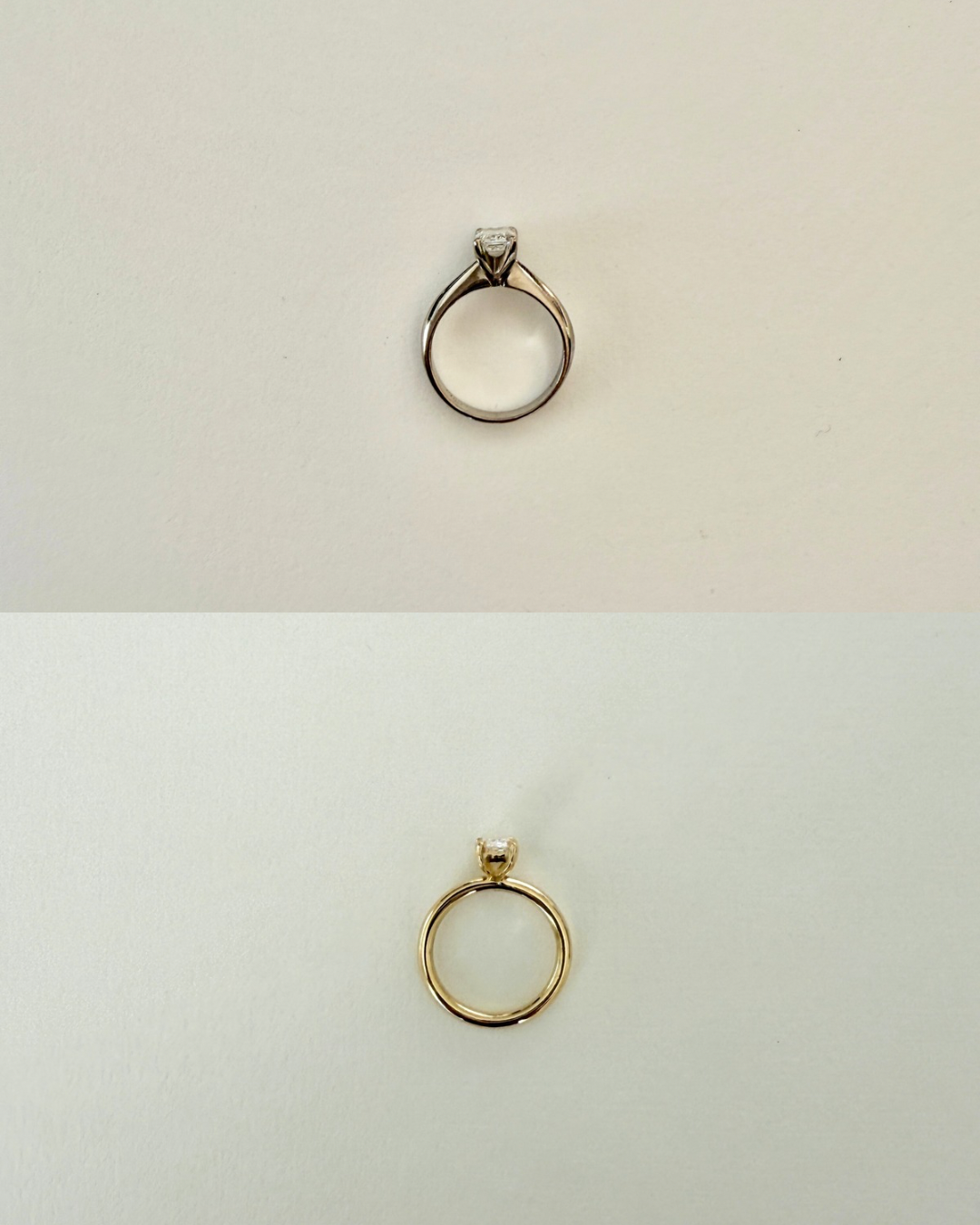
Redesigning an heirloom piece of jewellery doesn't erase its story. It preserves the sentiment while transforming precious metals and stones into something built for how you live now. The stone stays the same. The original story stays the same. Only the form changes.
Below are the key things to consider when you're turning something old into something worn again and what that process actually looks like.
1. Is your piece a good candidate?
A few signs it's time for a redesign, not a replacement.
-
Loose or worn settings - prongs thinning, stones shifting, metal worn out from decades of wear.
-
A style that no longer fits how you dress - Outdated metal tone, a silhouette that feels more like someone else's than yours.
-
Stones you love but never wear as-is - Beautiful, sentimental and sitting in a drawer instead of on you.
- Multiple small valuable pieces with no everyday use - Several rings, unworn gold, broken chains beyond repair that could become one piece you'd actually wear (and love).
2. Assess your materials
Start by understanding what you actually have.
-
Stone type - Diamonds, sapphires and rubies are hard enough (8+ on the Mohs scale) to be safely unset and reset. Softer or porous stones (emerald, opal, pearl etc) need extra care and specialist handling and design considerations.
-
Solid gold - As a valuable commodity, solid gold can be traded in and credited toward your new piece. Some gold can be melted down and reused directly, but older metals often carry impurities that make full reworking difficult.
- Unused and unworn materials - Gather older or unwearable gold (broken chains, bent bands, single earrings) to add to your gold credit weight.
3. Design Strategy
| Reset | The same stone, moved into a new band and setting for. Examples: A high-shoulder ring style can be reset into an East-West design, or setting lowered for a modern profile. |
| Combine | Two or more pieces, like stones from several rings or a pendant and earrings, brought together into one design. Or an heirloom stone paired with a new one, built for now. |
| Divide | One piece, shared across a few. Example: A cluster ring with multiple size stones becomes several new pieces for the next generation. |
| Reshape | A full reimagining. The central stone stays; everything around it starts from a blank page. |
| Tone | Change the metal's tone to match where you are now. Example: Shifting from yellow gold to white gold can change the whole aesthetic. |
4. The Redesign Process
Every redesign begins with a conversation. Bring the piece in, tell us what it means to you and what isn't working, and we'll talk through what's possible before anything is decided. Learn more about the full process here or begin with a conversation to answer your remodelling questions here.